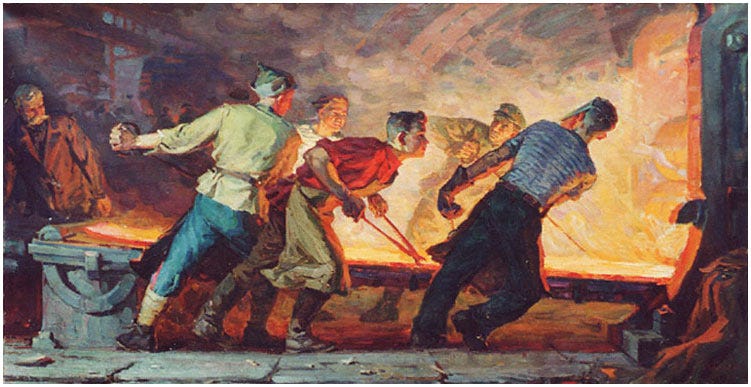
The Storm Centre: Radical Empiricism and Embodied Phenomenology

This essay explores embodied phenomenology within William James’ radical empiricism, emphasizing consciousness as a dynamic process emerging from the holistic interplay of mind, body, and environment. It critiques traditional subject-object dichotomies, advocating for a view where pure experience is fundamental to understanding lived reality. James’ insights resonate with later phenomenologists like Heidegger and Merleau-Ponty.

The Faculty of Effort: William James and the Speculative Empiricist Attitude Towards Lived Experience and Approach to Philosophy

This essay outlines speculative empiricism, emphasizing experience’s dynamic nature and human self-seeking behavior. William James argues that our identities and achievements are shaped through social interactions and habits. He posits that life should be understood as a process of becoming, with ethical and existential implications rooted in human experiences and creativity.

Striving Towards Ownness: A Study of Max Stirner from the Perspective of Radical Empiricism

This essay examines Max Stirner’s philosophy of egoism through radical empiricism and pragmatism. It explores how Stirner’s egoism emphasizes individual uniqueness, critiques abstract concepts, and advocates for personal freedom. The discussion encompasses embodied phenomenology, pragmatic ethics, and political philosophy, proposing a “union of egos” as a voluntary alternative to state authority.

A World of Dangers and Victories: A Comparitive Study of William James and Friedrich Nietzsche

This essay compares the philosophical perspectives of William James and Friedrich Nietzsche, focusing on their critiques of language, truth, and existence. Both thinkers advocate for creativity and the acceptance of life’s complexities, yet differ in approach: James emphasizes communal truth and pragmatism, while Nietzsche champions individualism and the pursuit of self-discovered truths.

Being Before God: Heidegger on Christianity as a Way of Life

Heidegger’s examination of religious life emphasizes the interplay between lived experience and historical context in Christianity. He critiques metaphysical frameworks, advocating for a phenomenological approach that recognizes the significance of temporality and authentic existence. Faith, for Heidegger, transcends dogma, focusing on how one enacts life amidst historical reality and existential uncertainty.

Blossoming Forth: A Peircean Interpretation of St. Isaac’s Evolutionary Cosmology

The text discusses the creation narrative from a theological and philosophical perspective, linking St. Isaac’s teachings with C.S. Peirce’s concepts of chance and consciousness evolution. It emphasizes the universe’s transition from abstract potentiality to concrete reality, while highlighting the relationship between divine intention and human development, proposing a theory of Theological-Persuasive Tychism.

Faculty X: Theosis and Superconsciousness

This essay examines Colin Wilson’s Superconsciousness as a framework for understanding the Christian concept of theosis, which involves human transformation through divine grace. It outlines seven consciousness levels, culminating in mystical consciousness, and discusses how prayer and virtuous living facilitate this spiritual ascent towards unity with God, rooted in Eastern Orthodox theology.

The Quintessence of Dust: The Human Hypostasis as the Image and Likeness of God

This essay explores Eastern Orthodox process theology, focusing on human hypostasis as an embodiment of divine likeness. It examines the interactions of active and passive hypostases across the cosmos, emphasizes human dignity through autonomy and self-governance, and integrates insights from thinkers like Hans Jonas and William James to frame human experience within divine creation.

The Seamless Garment: A Groundwork for an Eastern Orthodox Process Theology

This essay explores the intersection of Eastern Orthodox theology and speculative empiricism, emphasizing a dynamic understanding of God and Creation. It critiques traditional thought, posits God as a catalyst of creativity, and frames Creation as an evolving tapestry of experiences, highlighting the relational unity of the Holy Trinity and the potential for human theosis.