
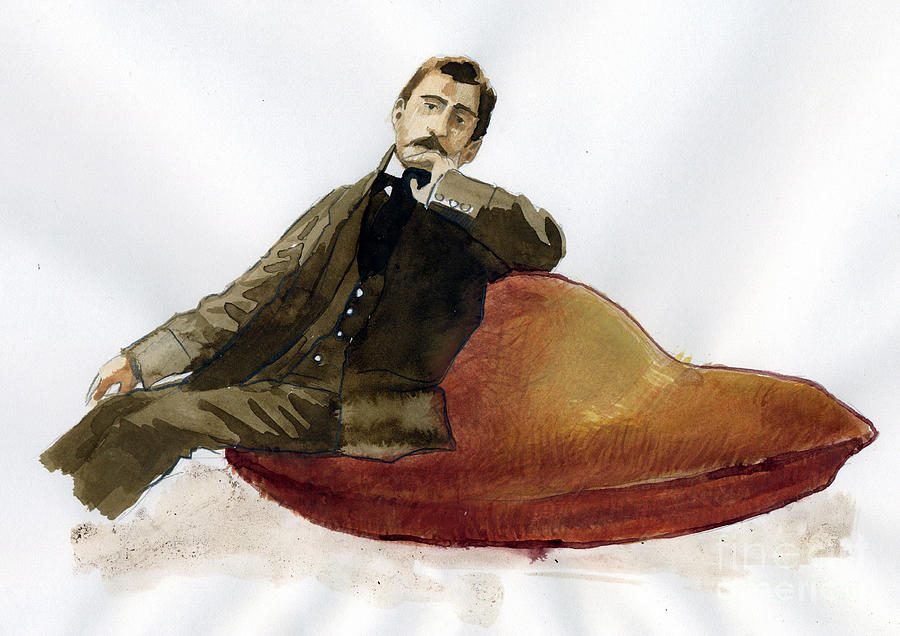
Note: Redraft of an essay sent to the Centre for Philosophy of Memory at the Université Grenoble Alpes, May 2026.
Introduction
In Finding Time Again, the final volume of In Search of Lost Time, Marcel Proust describes memory as “real without being present, ideal without being abstract” (FTA, p. 181). The remembered past is no longer present as a tangible object before the subject, yet neither has it collapsed into nothing. It persists as an absence that acts. A taste, scent, sound, texture, or image can return what has perished as immediate life to consciousness with renewed force. To remember is therefore to undergo the “dizzying uncertainty” in which the self “stumbles” between mortal loss and the strange persistence by which lost time continues to shape the present (FTA, p. 183).
This essay argues that memory is the creative survival of the past after presence. What has ceased to exist as immediate actuality remains dynamically efficacious: it enters the present as trace, relation, bodily disposition, inherited possibility, moral pressure, and imaginative form. Memory neither restores the past unchanged nor merely records its disappearance. It carries what has perished into new acts of perception, judgement, action, and creation.
Plato and Augustine first establish that memory belongs to truth and selfhood rather than mechanical retention. Nietzsche, Heidegger, and Merleau-Ponty then show why the past cannot be securely possessed: remembrance depends upon forgetting, retrieval, embodiment, and the world. James and Whitehead provide the metaphysical centre by explaining how past and present remain genuinely related, and how what perishes becomes available to subsequent becoming. Tolkien and Lewis finally give this structure narrative and geographical form, showing how lost actuality survives as myth, relic, landscape, mercy, and world.
A Large and Boundless Chamber: Plato, Augustine of Hippo, and the Origin of the Proustian Paradox
Plato and Augustine give the past a home in the soul, though they do so in different ways. Plato grants memory a transcendental ambition: the soul is not confined to passing sensation but retains a relation to truth beyond temporal flux. Augustine gives memory an inward depth in which a life is gathered and made answerable before God. Neither thinker, however, permits simple possession. Recovery always occurs through a medium, and every medium can preserve, alter, or conceal what it carries.
Plato’s first account of memory is recollection (anamnesis). In the Meno, Socrates answers the paradox of inquiry by arguing that learning is not the acquisition of wholly alien knowledge. The soul has already encountered truth; instruction awakens what has been forgotten. Hence the claim that “research and learning are wholly recollection” (Meno, 81d). Present consciousness may have lost access to truth, but truth does not depend upon present sensation for its reality.
The slave-boy demonstration makes this claim concrete. Through Socrates’ questions, the boy comes to recognise a geometrical relation that he had not previously been taught. The diagram in the sand occasions the recognition, but does not create the truth recognised. Memory here moves vertically rather than merely backwards: it does not return to an earlier empirical episode, but reopens the soul’s relation to an intelligible order. The absent can therefore be real because reality exceeds what is presently sensed.
The Theaetetus replaces this confidence with a more vulnerable image. Socrates asks us to imagine the soul as “a block of wax,” given by Memory, mother of the Muses. Perceptions and thoughts are pressed into it “just as we make impressions from seal rings”; whatever remains imprinted can be remembered, while what is rubbed out or never receives a clear impression is forgotten (Th., 191c-e).
The wax block introduces the fragility that recollection seemed to overcome. An imprint may be shallow, blurred, wrongly matched, or erased. Memory now depends upon a medium exposed to time. The surviving mark is present, but the event that made it is not; it represents what has gone and can therefore preserve or distort it. Proust’s paradox begins here. Memory must make the absent effective without abolishing its absence.
In the Philebus, the soul becomes both a book and an image-making chamber. Socrates says that memory, sensation, and their accompanying feelings “write words in our souls”; a truthful scribe produces true opinion, while a false one produces error (Ph., 39a). A second figure then appears: “a painter, who comes after the writer and paints in the soul pictures of these assertions” (Ph., 39b). Remembrance is no longer only impression but inscription, judgement, and image.
This movement from mark to interpretation gives memory an irreducibly imaginative character. The past is preserved only by being formed, and whatever forms can falsify. No remembered world is transferred unchanged into the soul. Language selects, images compose, judgement connects, and desire gives emphasis. Plato therefore makes memory more difficult than either pure recollection or storage: what survives does so through operations that can also mislead.
Augustine inherits this tension and turns it from a problem of knowledge into an architecture of inward life. Book X of the Confessions asks not only how the soul knows truth, but how a person becomes present to himself. Memory is the interior field in which a life can be recalled, narrated, judged, and confessed.
Augustine calls memory a depth without apparent limit: “Great is the force of memory, excessive great, O my God; a large and boundless chamber! Who ever sounded the bottom thereof?” (C, X.8). The chamber belongs to the self and yet exceeds it: “nor do I myself comprehend all that I am. Therefore is the mind too strait to contain itself” (C, X.8). Memory is not merely a faculty at the subject’s disposal. It is the inward immensity in which the subject discovers that self-possession is incomplete.
Augustine states the point most directly when he describes what occurs within that chamber:
“All this do I within, in that huge court of my memory. For there have I in a readiness the heaven, the earth, the sea, and whatever I could perceive in them, besides those which I have forgotten. There also meet I with myself; I recall myself, what, where, or when I have done a thing; and how I was affected when I did it” (C, X.8).
“There also meet I with myself” defines memory as self-relation. Augustine recalls not only things but himself among them; not only actions but the affections, desires, guilt, and judgement that accompanied them. A life survives neither as neutral data nor as a sequence of bare events. It remains as an inward history through which the self becomes intelligible and answerable before God.
Confession makes this recollection ethical and theological. Augustine does not inspect the past as an antiquarian handles relics. He searches it because memory reveals what he has loved and therefore who he has become. By bringing the past into speech before God, remembrance makes the self narratable to itself without allowing it to become its own final judge.
Inwardness nevertheless grants no mastery. Memory contains places, arts, affections, words, numbers, desires, experiences, and forgotten things. It holds what Augustine has known, suffered, and done, together with what he cannot recover. The deeper he enters, the less the chamber resembles a controlled archive. It is a sanctuary whose depths remain unsearchable.
Forgetting exposes this limit most sharply. Although it appears to be memory’s opposite, Augustine can remember forgetfulness itself: “When then I remember memory, memory is present to itself by itself; but when I remember forgetfulness, there are present both memory and forgetfulness: memory whereby I remember, forgetfulness which I remember” (C, X.16). Memory therefore carries a trace of its own failure. What cannot be recovered is not simply outside the chamber; absence is registered within it.
Plato and Augustine consequently refuse a mechanical account of remembrance. Plato binds it to truth, mediation, and judgement; Augustine binds it to identity, confession, and transcendence. Yet neither secures the past intact. Wax fades, the internal scribe errs, images deceive, and the chamber contains forgotten regions. Memory is more than empirical retention but less than possession. The self lives from traces it cannot fully verify, within an inward house it does not master.
The Sonata Sings Through Him: Plastic Power, Forgetfulness, and Flesh in Nietzsche, Heidegger, and Merleau-Ponty
In On the Uses and Disadvantages of History for Life, Friedrich Nietzsche begins not with the soul’s ascent to truth or its inward recovery, but with the requirements of life. Individuals and cultures can be crushed by history. Inherited knowledge, reverence, grievance, and comparison may accumulate until action becomes impossible. Memory then ceases to nourish and becomes a sickness. Nietzsche’s counterclaim is severe: “it is altogether impossible to live at all without forgetting” (UT, p. 62).
Forgetting is not mere failure, stupidity, or evasion. It is the active power by which life establishes a horizon. A subject who retained every detail, like Borges’ Funes the Memorious, could not abstract, decide, or begin; each event would remain entangled in limitless particularity. Action requires the field of relevance to close around some possibilities and exclude others. Nietzsche’s unhistorical animal is not a complete model for humanity, but it reveals a condition that historical consciousness often conceals: remembrance becomes life-serving only when forgetting gives it form.
Nietzsche names the corresponding capacity “plastic power”: the strength “to transform and incorporate into oneself what is past and foreign, to heal wounds, to replace what has been lost, to recreate broken moulds” (UT, p. 62). The past is not saved by remaining intact. It must be digested and reorganised within a living form. What cannot be incorporated hardens into resentment, nostalgia, antiquarianism, or paralysis; what can be transformed becomes a resource for action.
This is the necessary correction to any sanctuary model of memory. Preservation alone can turn inward life into a mausoleum. Good remembrance does not keep everything with equal fidelity; it selects, interprets, and converts inheritance into capacity. The creative survival of the past therefore requires forgetting, because only a bounded past can be carried forward rather than merely suffered.
In Being and Time, Heidegger makes forgetfulness still more fundamental. Dasein does not first possess itself and then occasionally lose what it knows. It exists through thrownness, everyday absorption, concealment, and inherited possibilities before any deliberate act of recollection. Heidegger therefore writes that “Memory is possible only on the ground of forgetting and not the other way around” (BT, p. 339).
The reversal places memory within finite temporality. Dasein is not an immortal soul recollecting eternal truth, but a mortal existence that must retrieve itself from ways of being already handed down. Death is not a later interruption added to an otherwise complete life: “As soon as man comes to life, he is at once old enough to die” (BT, p. 245). Remembering cannot escape this finitude. It is one way in which a finite being assumes what it has inherited.
Heidegger accordingly replaces restoration with retrieval. The past is not a stored object behind the present, but a field of possibilities that may be taken up again. Resoluteness “becomes the repetition of a possibility of existence that has come down to us,” an “explicit handing down” that returns to the possibilities of the Dasein that has been there (BT, p. 437). Repetition is not duplication. An inherited possibility becomes actual only through a new decision made under altered conditions.
Nietzsche and Heidegger therefore agree that the past survives through transformation rather than conservation. Nietzsche asks whether inherited history can be incorporated into life; Heidegger asks whether a finite existence can retrieve a possibility from concealment and make it futural. In both accounts, memory is a task: what has been becomes real in the present only through the manner in which it is taken up.
Yet remembrance does not return only as a possibility for decision. It arrives through smell, sound, posture, colour, place, muscular tension, and atmosphere. Merleau-Ponty supplies the account of embodiment needed to explain how a past can be carried before it becomes an explicit object of thought.
His starting point is perception understood as bodily participation in the world. The body is neither a mere object among objects nor a detached subject looking outward. It is the hinge between seeing and being seen, touching and being touched. Merleau-Ponty describes it as “a being of two leaves”: on one side “a thing among things,” and on the other “what sees them and touches them” (VI, p. 137).
This double belonging changes the meaning of memory. If the body is woven into the world it perceives, remembrance cannot be confined to a private image stored behind the eyes. The hand remembers an instrument; the feet recognise a road; the voice recovers a prayer or song; the body contracts in a room before consciousness has named why. The past survives in habits, capacities, hesitations, gestures, and orientations. It is lived before it is represented.
Merleau-Ponty’s later name for this intertwining is “flesh” (la chair). Flesh is neither biological matter in the ordinary sense nor spirit under another name. It is “the formative medium of the object and the subject,” an “element” and “the concrete emblem of a general manner of being” (VI, p. 147). Because perceiver and perceived arise within this shared element, things appear with temporal depth rather than as bare present surfaces. A room, road, tree, scar, or melody can carry a past because experience is already relational and sedimented.
Music makes this participatory structure visible. Merleau-Ponty writes that “we do not possess the musical or sensible ideas; they possess us”; the performer does not merely reproduce the work, because “the sonata sings through him,” opening “vortexes in the sonorous world” (VI, p. 151). Years of practice do not return as a set of images consulted one by one. They become active in timing, pressure, expectation, and movement. The performer remembers by entering again into a field that the body has learned to inhabit.
Merleau-Ponty thus locates the surviving past in the sensible relation between body and world. Nietzsche establishes the selective force required for life; Heidegger explains retrieval as the renewed assumption of inherited possibility; Merleau-Ponty shows how inheritance persists beneath deliberate recollection as habit, orientation, and atmosphere. Memory is never pure possession. It is finite, selective, embodied, and worldly.
Thou Art Mine: William James, A. N. Whitehead, and the Creative Survival of the Past
William James provides the decisive first step beyond the choice between presence and unreality. The past need not stand before consciousness as an object in order to be real; it may be real through the experienced relation by which it enters the present. Radical empiricism refuses to divide experience in advance into inner mental contents and outer material facts. What is given includes transitions, continuities, tendencies, conjunctions, appropriations, and felt relations. James states the methodological rule plainly:
“To be radical, an empiricism must neither admit into its constructions any element that is not directly experienced, nor exclude from them any element that is directly experienced” (ERE, p. 22).
The consequence follows immediately:
“The relations that connect experiences must themselves be experienced relations, and any kind of relation experienced must be accounted as ‘real’ as anything else in the system” (ERE, p. 22).
Memory can therefore be understood as a lived relation between present and past experience. A remembered room, road, face, song, wound, or childhood scene is not merely a subjective image imposed upon a neutral present. Its reality lies in the concrete continuity, affective force, and appropriation through which what has been becomes operative now.
Proust’s madeleine does not restore Combray as empirical presence or reverse chronological time. It opens a relation in which the lost world becomes newly efficacious. Taste joins two moments that remain numerically distinct, allowing the past to enter the present without becoming identical with it. Involuntary memory is powerful precisely because the relation is experienced before it is deliberately constructed.
James’ image of consciousness as a stream clarifies the point:
“Consciousness, then, does not appear to itself chopped up in bits. Such words as ‘chain’ or ‘train’ do not describe it fitly as it presents itself in the first instance. It is nothing jointed; it flows. A ‘river’ or a ‘stream’ are the metaphors by which it is most naturally described” (PP, I, p. 239).
The stream opposes any cabinet model in which discrete contents are stored and later retrieved unchanged. Each moment bears the pressure of what has just passed while leaning towards what is coming. Memory belongs first to transition and continuity, only later to explicit recollection.
Continuity does not mean identity. James insists that “No state once gone can recur and be identical with what it was before” (PP, I, p. 230). Every act of remembering occurs within a different body, situation, knowledge, desire, and loss. The object may be recognised as the same, but the experience of remembering is new. Memory is continuity through difference.
James names the operation that sustains personal continuity “appropriation”. Each new thought receives its predecessor as “warm” and greets it with the words: “Thou art mine, and part of the same self with me” (PP, I, p. 339). The self is not a fixed substance underneath experience, preserving a collection of contents. It is the achieved continuity by which succeeding moments take up preceding ones as their own. The present becomes this present by inheriting what has just ceased to be.
James therefore gives memory a relational reality. The past survives because it is carried, felt, selected, and appropriated within the stream. What remains unresolved is the metaphysical status of the past once its own immediacy has perished. Whitehead supplies that account by making inheritance constitutive of actuality itself.
Reality, for Whitehead, is not composed of inert substances that first exist and later enter relations. It consists of actual occasions: acts of becoming that gather an inherited multiplicity into a new unity. His formula is concise: “The many become one, and are increased by one” (PR, p. 21). The present is the new one composed from the many that have already become; once achieved, it joins that many as a condition for what follows.
Nothing becomes from nothing. Every actuality receives a world already achieved and laden with fact, value, limitation, and possibility. The present is not a point severed from the past but a creative composition of antecedent actuality. Whitehead calls this reception “prehension”: the primitive relation through which an occasion feels, selects, and integrates its actual world.
Prehension is broader than conscious memory. It is not a mind looking backwards at an object called the past, but the process by which becoming inherits what has already become. Human recollection is therefore a specialised, conscious instance of a more general structure. Before anyone remembers an event as an image, the present has already arisen from conditions produced by prior actuality.
Whitehead’s doctrine of objective immortality states the consequence: “the creature perishes and is immortal” (PR, p. 82). An actual occasion cannot remain in the vividness of its own self-enjoyment. It completes itself, achieves satisfaction, and passes away. In perishing as subject, however, it becomes available as object: a settled fact in the actual world from which later occasions arise. It is no longer alive for itself, but it remains effective for others.
The later phrase “we perish, yet are immortal” condenses the same claim (ESP, p. 117). Perishing is real. Childhood cannot be re-entered, the dead cannot resume their former immediacy, and no moment can be held open indefinitely. Yet loss is not annihilation. What has been enters the future as fact, pressure, value, and condition. Its subjective life is over; its objective efficacy remains.
Whitehead completes the movement begun by James. James shows that relations are as real as the terms they connect; Whitehead explains how a completed actuality becomes available for later relation. James’ present appropriates its predecessor; Whitehead’s actual occasion prehends its world. The stream of consciousness becomes one local form of the wider creative advance. The past is real without being present because it survives as inherited efficacy.
This account also clarifies forgetting. No present can receive the whole past with equal intensity. Every act of inheritance selects: some elements are intensified, others dimmed, excluded, simplified, or lost. Nietzsche’s active forgetting is therefore incorporated rather than rejected. The past must be composed in order to become livable. Memory is not total retention but selective inheritance.
Whitehead further explains why remembrance is often experienced as pressure rather than picture. Symbolism describes “the sense of derivation from an immediate past, and of passage to an immediate future” as essential to experience (SME, p. 47). Grief, shame, love, guilt, homesickness, reverence, trauma, and bodily habit do not always return as clear representations. They alter what can be perceived, desired, feared, said, and done. Their reality lies in the difference they make.
Merleau-Ponty shows how this efficacy is carried through the body-world relation; Whitehead explains why the world itself can possess such depth. A road, room, tree, scar, ruin, song, body, or city is not a merely present surface. Each is the achieved outcome of prior becoming and therefore carries a history within its current form. The visible has depth because actuality is cumulative.
An ethical consequence follows. If what perishes becomes datum for the future, then nothing done is simply erased. A wound inflicted, a mercy offered, a promise kept, a forest felled, a place destroyed, or a song preserved enters the conditions from which later life must proceed. The act may be forgotten, denied, or distorted, but its consequences have become part of the world. Memory is therefore personal, historical, communal, and ecological. The dead press upon the living because the living inherit what the dead made actual.
Inheritance does not entail fatalism. The past is given, but the manner of its reception is not mechanically fixed. Each new occasion receives antecedent actuality under a perspective and composes it into a new unity. The present cannot undo what has been; it can determine how what has been will be carried forward. Creative advance means precisely this conversion of settled fact into an ingredient of novelty.
Memory is therefore the present’s relational and prehensive inheritance of what has perished. The past does not return as its former subjective immediacy. It remains as datum, pressure, limitation, value, possibility, and lure. Presence is not the only mode of reality. Objective immortality names another: what has ceased to live for itself survives by entering the becoming of what follows.
The Regaining of a Clear View: J. R. R. Tolkien and C. S. Lewis on Sub-creation and Mythopoeia
James and Whitehead establish the metaphysical structure: what has perished remains available as relation and inheritance. Tolkien and Lewis show how this structure becomes perceptible in imagined worlds. Their mythopoeia does not merely illustrate memory. It enacts the transformation by which inherited language, loss, landscape, history, and desire are recomposed into forms that can be inhabited.
Tolkien’s theory of sub-creation begins by rejecting the thin formula of a “willing suspension of disbelief”, as though the reader merely agreed to tolerate an illusion. The successful story-maker creates “a Secondary World which your mind can enter”; within it, what is related is “true” because it accords with the laws of that world (OFS, p. 37). Such a world is not present in the manner of ordinary empirical surroundings, but neither is it abstract or inert. Its coherence gives it experiential reality.
Memory shares this structure without being identical to fantasy. A remembered childhood, dead friend, lost country, vanished house, or former self is not present as an object before the senses, yet it can still be entered, suffered, loved, feared, and inhabited. Tolkien’s secondary world gives literary form to the way an absent reality can retain coherence, depth, and affective force.
Sub-creation also makes explicit the compositional work of remembrance. Middle-earth is not produced from empty invention but from inherited languages, myths, histories, landscapes, wars, griefs, and religious longings. Tolkien receives materials already marked by time and reorganises them into a new order. Names, songs, swords, ruins, cities, genealogies, and roads carry pastness because each object appears within a history larger than its present use.
The reforging of Narsil provides a precise example. The broken sword bears Elendil’s death, Isildur’s failure, Sauron’s defeat, exile, decline, and the possibility of return. When it becomes Andúril, the old blade is neither restored to its original moment nor discarded. Its inherited history is taken up under a new form and made efficacious within a different crisis. What has perished survives as sign, burden, promise, and power.
Tolkien’s concept of recovery names the perceptual consequence. Fantasy can restore familiar things to strangeness and value: “Recovery,” he writes, “is a re-gaining — regaining of a clear view” (OFS, p. 57). Habit dulls the world by treating it as already known and possessed. Recovery does not retreat into nostalgia; it releases the familiar from possession so that it can be seen again. Proust’s madeleine performs a comparable operation when lost time returns not as information but as renewed depth within the present.
Eucatastrophe gives this recovery a temporal and moral form. Tolkien defines it as the “sudden joyous ‘turn’”, neither “escapist” nor “fugitive”, but arriving as “a sudden and miraculous grace” (OFS, p. 68). Its joy depends upon the reality of dyscatastrophe, sorrow, and failure. The turn does not cancel what has happened; it denies that suffering has exhausted what can happen. Loss is gathered into an unforeseen pattern without being declared unreal.
The destruction of the Ring embodies this structure. Frodo does not prevail through heroic purity. At Mount Doom he fails: “I do not choose now to do what I came to do. I will not do this deed. The Ring is mine!” (LotR, VI.3). The quest nevertheless succeeds because earlier acts remain efficacious. Bilbo’s pity, Frodo’s mercy, Gandalf’s counsel, Gollum’s survival, and the Ring’s corruption converge in the final turn. Gandalf had warned that many who live deserve death and some who die deserve life, while even the wise cannot see all ends (LotR, I.2). The outcome reveals the hidden futurity of acts whose consequences could not be mastered when they were performed.
Memory is here transfigured into plot. Mercy appears spent when offered, yet later becomes decisive. Its meaning is not exhausted by the original moment because subsequent events can disclose a relation that was then invisible. Tolkien thus narrates Whitehead’s metaphysical claim: an actuality perishes as immediate experience but survives as an ingredient in what follows.
Eucatastrophe does not erase the wound. Frodo saves the Shire but cannot remain within the life he preserved: “I have been too deeply hurt, Sam” (LotR, VI.9). Victory does not restore innocence, and grace does not convert history into harmless appearance. The past is transfigured rather than undone. Tolkien’s final form of memory is wounded joy: suffering carried within a meaning that exceeds it without denying it.
Lewis adds the memory of place. In Prince Caspian, the Pevensies return to Narnia after only a year in England, while centuries have passed within the other world. Their reign has become antiquity. Cair Paravel lies in ruins, relics remain in the treasure chamber, and the orchard they planted has grown around the broken walls. Their past has become landscape.
Edmund names the temporal disjunction: outside Narnia one has “no idea how Narnian time is going”, and hundreds of years may pass there during a single English year (PC, ch. 2). The remembered world has not waited unchanged for the rememberer. It has undergone its own history. Return is therefore not restoration but an encounter with the altered form in which the past has objectively survived.
Susan’s bow produces the most Proustian moment. When she bends it, “that one small noise brought back the old days to the children’s minds more than anything that had happened yet”; “all the battles and hurts and fears came rushing into their heads together” (PC, ch. 2). Sound opens an entire world, but the recovery is not merely sweet. Battle, fear, and injury return with it. Lewis understands that recovered time includes the wounds by which it was lived.
Memory in Prince Caspian is also political. The Telmarines have not only conquered Old Narnia; they have suppressed its credibility. Doctor Cornelius explains that they “silenced the beasts and the trees and the fountains”, killed or expelled the old inhabitants, and now attempt “to cover up even the memory of them” (PC, ch. 5). Forgetting becomes a technique of rule. A regime secures the present by making another past unbelievable.
The political suppression is inseparable from ecological violence. Trufflehunter says that the invaders felled forests and defiled streams until the Dryads and Naiads sank into sleep (PC, ch. 7). Place is not neutral scenery but a bearer of relation, voice, and history. To destroy the forest or mute the river is also to destroy the forms through which a world remembers itself. The Telmarine order depends upon treating nature as mute material and history as controlled narrative.
Aslan’s return therefore restores more than a dynasty. Trees wake, the river-god rises, and old creatures speak again. The point is mythic rather than biological: a world reduced to objecthood becomes once more a field of persons, agencies, loyalties, and memories. Old Narnia has survived in sleep, ruin, story, secrecy, and hidden fidelity. Recovery is the reawakening of those relations.
Lewis thus extends memory beyond minds, bodies, and books. Ruins, orchards, rivers, forests, names, relics, and roads can carry what people have forgotten or rulers have suppressed. The children remember Narnia, but Narnia also remembers through them; their return gives speech to a past sedimented in the land.
Tolkien and Lewis show why mythopoeia belongs within a philosophy of memory. Tolkien demonstrates how inherited loss can be recomposed into a secondary world, and how earlier acts may acquire unforeseen efficacy without ceasing to be tragic. Lewis shows that remembrance can be spatial, political, ecological, and communal. In both, the past survives not by remaining unchanged but by becoming world.
Conclusion
Memory is not the recovery of a vanished object. It is the afterlife of an actuality that has ceased to be present without ceasing to operate. What has perished cannot be restored to its original immediacy; childhood cannot be re-entered, the dead cannot resume their former subjectivity, and no event can be made not to have passed. Yet what has been enters the present as trace, bodily disposition, inherited possibility, moral pressure, and imaginative form. Reality is not exhausted by presence.
Proust’s remembered past is “real without being present, ideal without being abstract” because its reality is efficacy rather than immediate givenness. Plato shows that absence survives through recollection, inscription, and image; Augustine locates the self within an inward chamber that it cannot master. Nietzsche makes forgetting a condition of viable inheritance, Heidegger converts recollection into retrieval, and Merleau-Ponty places the past within the sedimented relation between body and world. James establishes the reality of experienced relations; Whitehead explains how what perishes becomes objectively available to later becoming. Tolkien and Lewis then show this inheritance becoming myth, mercy, relic, landscape, and world.
Memory neither defeats time nor concedes that loss is the whole truth. It refuses two equal falsifications: that the past can be preserved without change, and that what is no longer present has become nothing. What has perished may still be carried, while what is carried acquires new meaning within the life, action, and world that receive it.
Memory is therefore the creative survival of the past: the transformation of lost actuality into material for what may yet be made. What has been returns neither as repetition nor as an inert record, but as trace, burden, depth, relation, inheritance, place, and possibility. To remember is to participate in the perilous labour by which the dead become ingredient in the living and lost time becomes the hidden matter of new worlds.
Sources and References
~(FTA) Proust, Marcel. Finding Time Again. Translated by Ian Patterson. London: Penguin Books, 2003.
~(Meno) Plato. Meno. In Laches, Protagoras, Meno, Euthydemus. Translated by W. R. M. Lamb. Loeb Classical Library 165. Cambridge, MA: Harvard University Press, 1990.
~(Th.) Plato. Theaetetus. In Theaetetus, Sophist. Translated by Harold North Fowler. Loeb Classical Library 123. Cambridge, MA: Harvard University Press, 2006.
~(Ph.) Plato. Philebus. In Statesman, Philebus, Ion. Translated by Harold North Fowler and W. R. M. Lamb. Loeb Classical Library 164. Cambridge, MA: Harvard University Press.
~(C) Augustine. Confessions. Translated by William Watts. Loeb Classical Library. Cambridge, MA: Harvard University Press, 1988.
~(UT) Nietzsche, Friedrich. Untimely Meditations. Translated by R. J. Hollingdale. Cambridge: Cambridge University Press, 1997.
~(BT) Heidegger, Martin. Being and Time. Translated by John Macquarrie and Edward Robinson. Oxford: Blackwell, 1962.
~(VI) Merleau-Ponty, Maurice. The Visible and the Invisible. Edited by Claude Lefort. Translated by Alphonso Lingis. Evanston: Northwestern University Press, 1968.
~(ERE) James, William. Essays in Radical Empiricism. Edited by Frederick Burkhardt, Fredson Bowers, and Ignas K. Skrupskelis. Cambridge, MA: Harvard University Press, 1976.
~(PP) James, William. The Principles of Psychology. Vol. I. New York: Henry Holt, 1890.
~(PR) Whitehead, Alfred North. Process and Reality: An Essay in Cosmology. Corrected Edition. Edited by David Ray Griffin and Donald W. Sherburne. New York: Free Press, 1978.
~(SME) Whitehead, Alfred North. Symbolism: Its Meaning and Effect. New York: Capricorn Books, 1959.
~(ESP) Whitehead, Alfred North. Essays in Science and Philosophy. New York: Philosophical Library, 1947.
~(OFS) Tolkien, J. R. R. “On Fairy-stories.” In Tree and Leaf. London: HarperCollins.
~(LotR) Tolkien, J. R. R. The Lord of the Rings. 50th Anniversary Edition. London: HarperCollins, 2004.
~(PC) Lewis, C. S. Prince Caspian. London: Geoffrey Bles, 1951.
 The Beginning of Terror